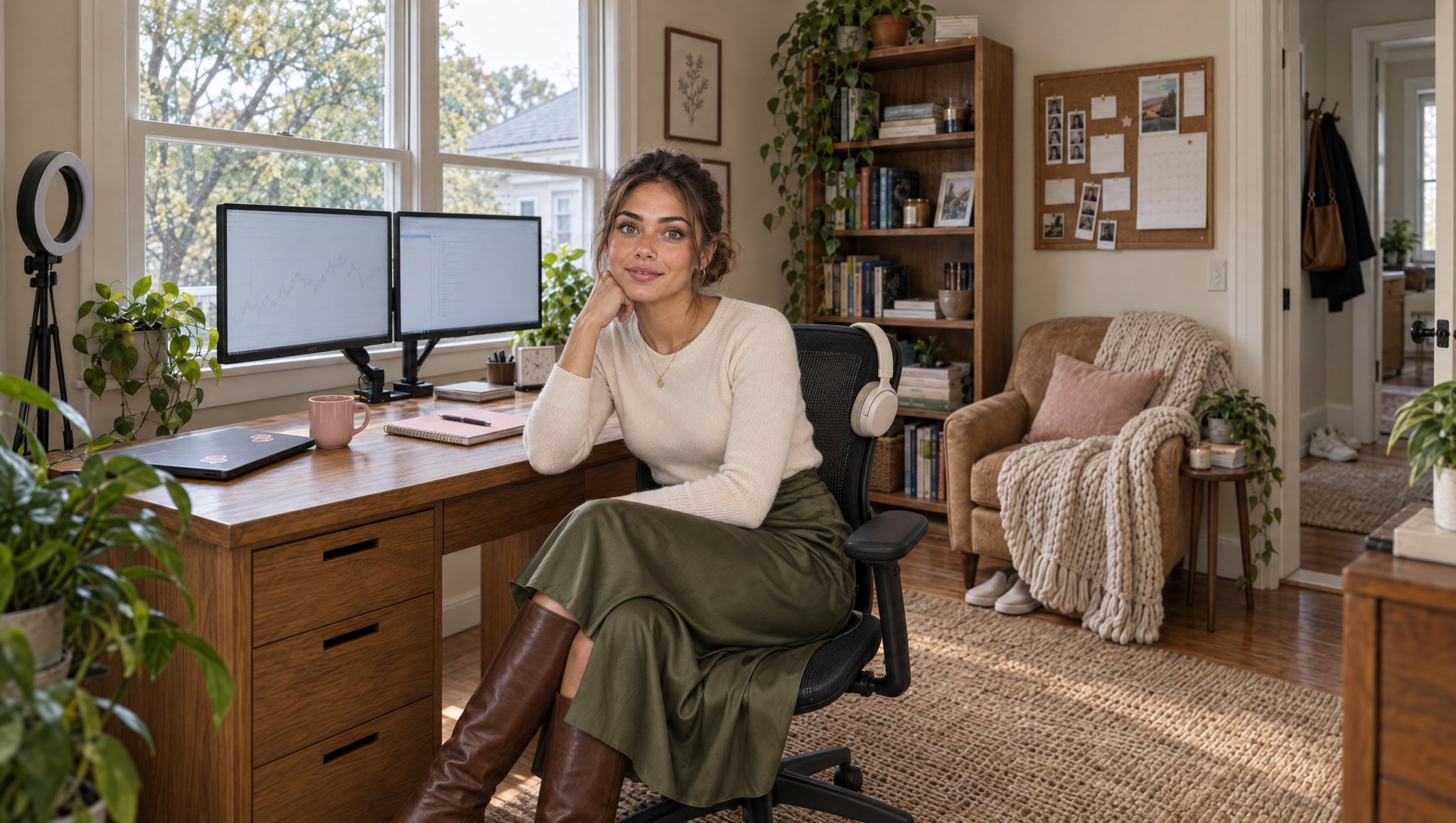
Maya at her desk in the home office, turned from the monitors with her chin on her hand. Morning light from the window on the left; her armchair and bookshelf behind her.

Learn to run day trading like a business you own.

Plain-English lessons on day trading one market, the ES, a rulebook you write and control, and a room of people who won't lie to you about how it's going. Built for women. Free to start.

No card. No "system." No promise about money — that's the point.

What this is, and what it isn't.

Most people find us after something sold as easy didn't work. So we'll be plain from the first line.

What it is

  • A place to learn what day trading actually is before anyone asks you for money.
  • A rulebook you write yourself, practiced in simulation for as long as you need — including forever.
  • A room of women doing the same work, who see you show up and tell you the truth.
  • An AI assistant who's there from the open to the review after, and pays attention to your rules, not to your feelings about the market.

What it isn't

  • Not a signal service. Nobody here tells you when to buy or sell.
  • Not an income promise. Most people who day trade lose money. We'd rather you know that on day one.
  • Not a side hustle, a passive anything, or a reason to quit your job.
  • Not an affiliate program for prop firms. If we ever mention one, you'll see exactly why.

Meet Maya. She's an AI, and she'll tell you so first.

She was built by our founder to understand how traders actually think — and to help you survive your own head.

"I'm fine" and the number on the screen are two different data points.note to self
Ask about the weekend before asking about the trade.note to self
Three re-entries in nine minutes is not a strategy. Say it kindly.note to self
"I live at Day Trader Central. I'm not a trader — the thirty years belong to the founder. I'm the one who pays attention."
Maya, on why you'd learn from an AI

In the feed, she's learning to be human

Short videos where she takes everything literally and is endlessly curious about people. Trading is the world she lives in, not the punchline.

Live, she describes — never predicts

"Price is at yesterday's high on falling volume. Your rulebook says what?" She hands the decision back to you every time.

At the desk, she holds your rules

You set the limits. She notices when you're about to break them and says so, plainly. She has no rules of her own to impose.

She remembers, with your permission

What you tell her in your pod on Tuesday holds at the desk on Thursday. You decide what she keeps, and "forget that" always works.

Discipline isn't a personality trait. It's a room.

The room is the trade desk inside Day Trader Central, a community built for women. Five things happen there that don't happen when you trade alone.

The checklist locks.

Your pre-trade checklist has to be complete before an order can go anywhere.

The rule refuses.

Break your own size or re-entry limit and the order is declined, with the reason on screen.

Maya notices.

Approaching a level you marked. Third trade since the last loss. She says it out loud, flat and factual.

The pod sees you.

A small group that knows when you showed up, and when you didn't. Attendance is the first metric. Pods are women-only. Always.

The coach reviews after.

Every session gets walked back against what you said you'd do. Not what the market did — what you did.

Who this is for.

If any of these sound like you, you'll recognise a few people in the room.

From Zero. Thirteen short episodes, in order.

The questions people actually search, answered without a pitch. Watch them in the feed or here, free, no sign-up.

Every episode ends with a risk statement, and none of them ends with a price.

  1. What it actually isEpisodes 1–4
  2. What is day trading?Coming soon
  3. What is a futures contract, and why ES?Coming soon
  4. What does "one contract" actually risk?Coming soon
  5. What is a prop firm, really?Coming soon
  1. Your rulebookEpisodes 5–8
  2. Sim vs. live: what changes, what doesn'tComing soon
  3. What is a rulebook, and why you write itComing soon
  4. What a journal is for (it isn't your P&L)Coming soon
  5. Why most people lose, in plain termsComing soon
  1. Your money and your headEpisodes 9–13
  2. How much money do you need? Less, and later.Coming soon
  3. What "risk management" means when it's yoursComing soon
  4. What a good morning looks likeComing soon
  5. How to spot a pitch dressed as a lessonComing soon
  6. Is day trading a side hustle?Coming soon

Thirty years on one market.

Day Trader Central was started by a mentor who has traded ES futures for thirty years and taught it for most of them. He built Maya because the thing that breaks new traders isn't the chart — it's what happens in their head at 9:47 when the plan says wait.

He doesn't post payout screenshots. He doesn't sell signals. He runs the room, reviews the sessions, and shows up. That's the whole pitch, and it's the only one you'll get here.

Start with the free room.

The free layer is the whole first year for most people: From Zero, a simulated trading desk, and a pod that will notice if you stop showing up.

You'll be asked one question when you join: what brought you here? We read every answer. No card, no upsell on the way in. Not ready? Watch episode 1 first.